Choosing the Right Sterilization Marking Pen
Sterilization marking pens are indispensable tools in environments where precision and safety are paramount, such as in laboratories, hospitals, and cleanrooms. The choice of the right pen is crucial, as it must withstand rigorous sterilization processes without compromising the integrity of the markings. In this article, we will explore the key factors to consider when choosing a sterilization marking pen that meets your specific needs.
Understanding Sterilization Requirements
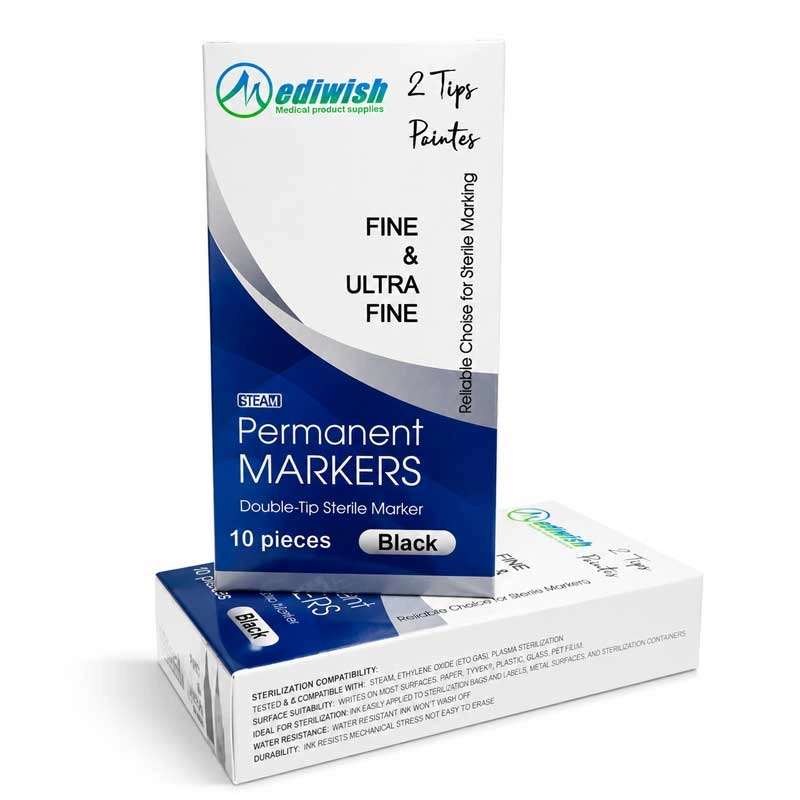
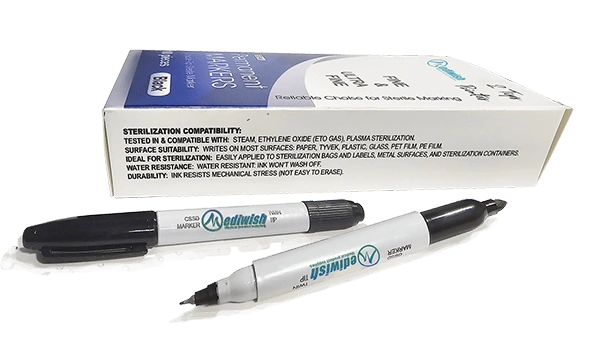
Check the documented intended use of the exact marker, packaging material and sterilization method. A general ‘sterilization marker’ description does not establish compatibility with every process. Markings must remain legible for their intended use. The marker’s stated compatibility does not make an otherwise unsuitable package compatible with the same process.
Fine Tips and Ink Considerations
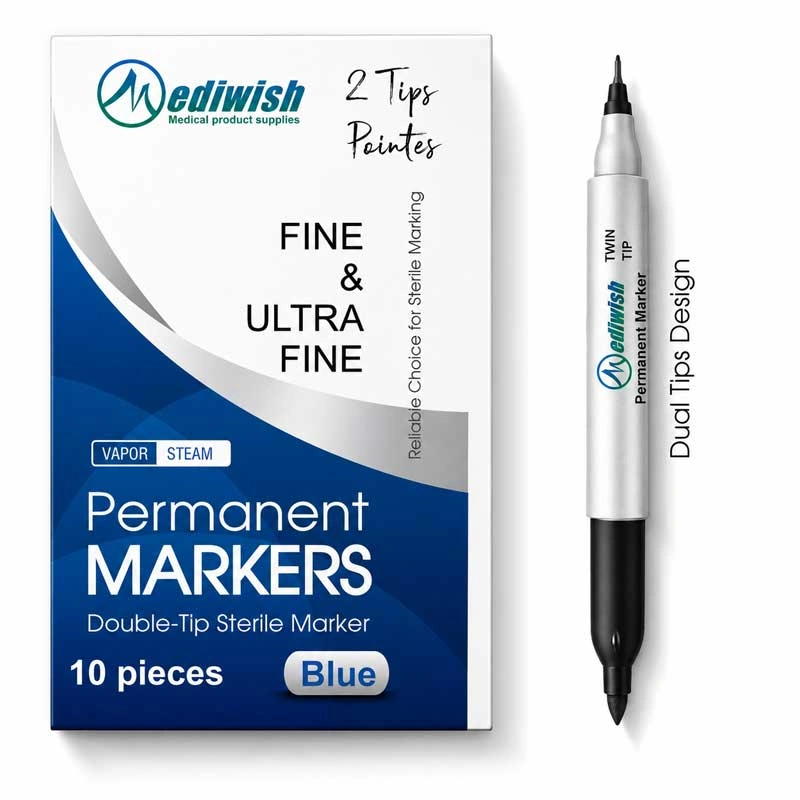
Precise marking is useful on small packages or labels. Select the tip size and ink color to suit the required information and available writing area. Black and blue options exist, but color alone does not establish suitability. Check the manufacturer’s information for the exact ink and intended application; do not assume that a general-purpose permanent pen is a sterilization marker.
Marking on Various Surfaces
The permitted marking location depends on the packaging instructions. For example, Steriking’s see-through pouch IFU identifies the film side or paper outside the seals, while its wrap IFU directs writing to suitable tape or an additional sterilization label. These are product-specific examples, not instructions for every package. Use the location permitted for the exact pack and avoid a writing tool that could puncture the barrier.
Durability and Reliability
Assess readability and resistance to smudging under the documented conditions of use. A description such as ‘permanent’ or ‘heat-resistant’ does not establish that every combination of ink, surface and process has been assessed. Reliable labeling depends on the actual marker and packaging combination, not on a general promise of compliance.
Avoiding Chemical and Toxic Substances
Use the manufacturer’s information on the exact ink formulation and intended use when assessing suitability. Do not describe a marker as certified or free from harmful emissions without applicable supporting documentation. If an ink property or compatibility statement is unclear, ask the supplier for the relevant product documentation rather than extending a claim from another marker.
Conclusion
Compare tip size, ink properties, permitted marking location and documented process compatibility for the intended packaging. Confirm the details for the exact product before introducing it into a workflow. These checks help turn a broad product description into a specific selection decision without promising universal compatibility or certification.
In need of further guidance on choosing the right pen? Feel free to reach out for personalized recommendations tailored to your unique needs.